Dismantling the Fairy Tale Princess: My Unpopular Take on the Game of Thrones Ending

With the final season of Game of Thrones having aired just last night, an overwhelming number of fans are out to take back the ending they feel was stolen from them with fire and blood—or more appropriately, with a Change.org petition that garnered over 1,224,756 signatures and counting as of 5/20/19 at 10:55 EST.

For the record, I do not support this petition. The idea that fans should mandate the writers of a TV show to remake their own art is preposterous and arguably censorship, which I despise based on principle. The whole point of art is, to quote Dany, you “don’t get to make those choices.” Love it or hate it, you are merely a spectator of someone else’s story.

However, like any fan whether they’ll admit it or not, I can’t get enough of Thrones or of our ill-fated, tragically flawed, and almost universally loved Daenerys Targaryen. Despite that the signs of her underlying ruthlessness for enemies both real and perceived were evident from season one when she watched unflinchingly as her brother died in agony while she mumbled about him being “no dragon,” and again in season two when she locked the king of Qarth and her handmaiden in a tomb to starve to death without batting an eye for hiding her dragons.

She also called for Jorah’s execution numerous times before being convinced to spare him by Tyrion because “killing someone so obviously devoted to you is not an act that inspires devotion.”

Underlying madness aside, I do agree that her character deserved better. After overcoming insurmountable odds back in season one and watching her grow over seven seasons of complex character development—emerging from a poor, meek, orphaned child living off the kindness of strange Eastern noblemen with her abusive brother who sold her into marriage to a ruthless Kahl who couldn’t speak her language to become the formidable vision of power and influence she achieved by season 8—her decision to go full Anakin Skywalker on King’s Landing could’ve benefited with at least another two episodes of buildup. I agree that it this final season felt rushed.

But was it, though? Or was it simply that I couldn’t get enough? I too was won over by Daenerys’s beauty and charisma—her resilience in the face of incredible odds. After all she’d endured in season one, I cheered when she emerged from Drogo’s funeral pyre, naked and unburnt and cradling three dragonlings, as all the remaining kahlasar fell to their knees, their faces touching the ground in reverence. That was some of the most stunning and seductive cinematography I’ve ever seen, even in a fantasy series.

We were transfixed by Dany from the moment we laid eyes on her, lured by her inner strength and attention-commanding presence—and seemingly evident, at least at the surface level, passion for elevating the downtrodden from the tyranny of despots and their deplorable human-rights abuses. We all felt satisfaction when she had Drogon torch the ruler of Astapor who continually insulted her in Valyrian with this epic line:

A dragon is not a slave … Dracarys.

My Defense of the Ending

I fall into the seemingly small percentage of fans who are satisfied with the ending, however rushed it clearly felt. I think my reasons closely mirror why I’ve always preferred Hans Christian Andersen’s “Little Mermaid” to what Disney produced. I don’t hate Dany for her descent into main antagonist, nor do I hate the writers, whether we’re referring to Benioff and Weiss or Martin—for making it so. In fact, I still love Daenerys as a character; I will still revel at stunning fan art of her with her dragons that I wish I had the artistic skill to create myself, and I’m satisfied that she was too good to be true—too human to be perfect, and too tragically flawed to be a savior.

Maybe it’s that angsty goth high-school girl still inside of me who’s such a sucker for a good tragedy. At worst, I might just be a masochist for preferring these types of endings. Daenerys Targaryen was beautiful, intelligent, resilient, and passionate—but ultimately, her lack of impulse control and the devastating loss of the only people she felt she could trust wast too much, and it overruled any sense of compassion she might’ve retained for the people of King’s Landing who didn’t blindly fall to her feet at the threat of death by dragonfire. Her seemingly rapid descent into madness is shocking until you think about her intentions and actions all along; it’s also a throat-punch of a reminder that beautiful and charismatic people can be just as deadly as anyone else with a self-serving agenda, and they are experts at hiding it. Daenerys was Thrones‘ wolf in sheep’s clothing.

I loved this about Dany because it made her human, complete with all the good and horrors that being human entails. She was effectively the Disney princess of the series, and if she’d received a Disney-princess ending, I would’ve felt cheated and lied to.

Martin’s fantasy epic was never intended to be the fairy tales we’re accustomed to in Western society, and A Song of Ice and Fire was set up from the beginning to embrace some basic fantasy tropes while turning the rest on their heads. It was a beautiful reflection of human nature at its most base and primal; it was a reflection of us and of what humans are capable of behind the masks we wear for society, those we trust, and our “enemies.” People identified with Dany because she overcame so much; any woman who’s ever felt alone and hopeless could project themselves onto season one’s Dany and easily rationalize multiple successive acts of cold-blooded violence as “they deserved it,” even when those acts would, in modern-day real life, be war crimes. Fans were justifiably crushed when she didn’t achieve what she believed with all her heart she was destined to achieve. When she said she was going to break the wheel, we presumed she meant to create a democracy, but how could that be when, just before, she said, “I will burn cities to the ground and take back what was stolen from my family. With fire and blood, I will take it.”

That we all continued to cheer for her despite knowing that not all her victims were really “evil” is a reflection of our own origins as bloodthirsty mammals, and that is a concept that we still struggle, as a species, to reconcile, whether it’s through contact sports, watching UFC, or loving a violent fantasy drama like Thrones.

Nevertheless, Drogon broke our hearts when he nudged Dany’s lifeless body like a dog trying to wake its owner, and my eyes welled up at his poetic reaction to melt the pointy metal chair that had consumed and destroyed his family.

One last thing: I want to talk about the Queen of the North

No one gave Sansa a chance and shrugged her off as stupid and useless from the very beginning, and some nerds at a GoT-themed ren fest laughed in my face when I said she was quietly strong and resilient and would make it to the end, so it goes without saying that I loved her [appropriate] ending as being crowned Queen of the North. I spent a lot of time trying to figure out why everyone hated her character so much. Like Daenerys, Sansa was a flawed human; however, since she had neither dragons nor a desire to wield weapons, fans mistakenly assumed she was weak and would be killed off early. Because she said some mean things as a twelve-year-old girl born to privilege, people hated her, but I implore you to go back and rethink all the ignorant and—let’s be real, downright mean—things you’ve likely said at that age. It didn’t make her a bad person; it made her a typical preteen.

Feminist fans in particular hailed Arya and Brienne on pedestals while declaring Sansa weak and “a little bitch.” Arya was my first favorite, but just because a woman isn’t an Arya or a Brienne doesn’t mean she lacks strength. It was refreshing to see a female protagonist in a fantasy series who chose to embrace her femininity and nobility rather than being just another Arya or Brienne—who, as badass as they are, are still tropes that we’re more than accustomed to seeing “win” things in the fantasy genre.

That Sansa’s more obvious strengths from the books weren’t sufficiently apparent in the show was a disappointment, but they were still apparent.

I think the reason so many were quick to write Sansa off was because, more than other characters, her early choices more accurately mirror the way a real-life preteen noble girl would likely have behaved given her unique circumstances, whether or not we all like to proclaim otherwise from the safety of our couches. (It’s worth noting here that, in book one, she did try to kill Joffrey by pushing him off that bridge where he made her stare at her father’s head on a spike, but the Hound physically stopped her while Joffrey had his head turned talking smack].

Another favorite Sansa scene and a testament to her resilience happened when Myranda—the kennel-keeper’s daughter at Bolton-controlled Winterfell—told stories of hers and Ramsay’s “hunting trips” that were thinly veiled threats to Sansa’s life while washing her hair in preparation for Sansa’s marriage to Ramsay. Sansa’s stone-faced response:

And exactly how long have you been in love with him, Myranda? I am Sansa Stark, and Winterfell is my home. You can’t scare me.

When it appeared that all hope of escaping her captors was lost, she bravely accepted her fate, asking Myranda to “please just kill me while there’s still some of me left.” Once back home as Lady of Winterfell, she demonstrated the knowledge and wisdom acquired from her years of captivity, abuse, and upheaval to display an enviable level of strategic logic and competence commanding the attention and respect of all the fighting men and noble houses of the North in Jon Snow’s absence. After all she’d seen, she wanted what the rest of the North always wanted—to have nothing to do with the [six] kingdoms and their strange customs and new gods—and her crowning as Queen of the North couldn’t have been more fitting an end [or beginning] for her character arc.
 

Poshmark Wholesale: Is it Worth it?

What is Poshmark Wholesale?

It’s a market within Poshmark where resellers can buy new clothes, shoes, and accessories in bulk from a wholesaler to resell in their Poshmark closets. It’s super easy to qualify to buy and sell wholesale items on Poshmark; all you need is to have sold at least ten items and have an average 4.5 star rating. If you already have a Poshmark account, you’ll likely receive an email telling you when you are eligible to access the wholesale market.

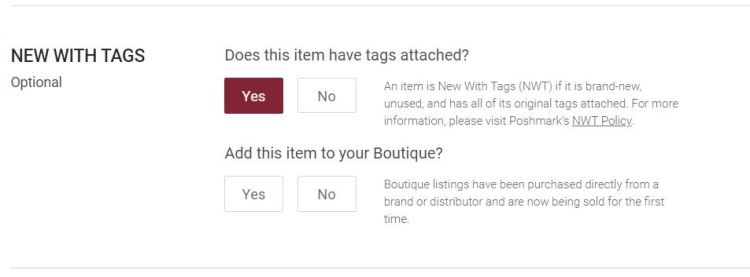
Anything you sell in your closet from the wholesale market you list as a Boutique item when creating your listing. The Boutique category becomes available after you indicate that the items are new with tags.

WHolesale_ListAsBoutique

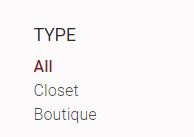
You’ll be able to share your boutique listings in the “Best in Boutiques” Posh Parties, and buyers looking specifically for boutique items can filter your closet by Boutique when browsing your listings.

Wholesale_ClosetType

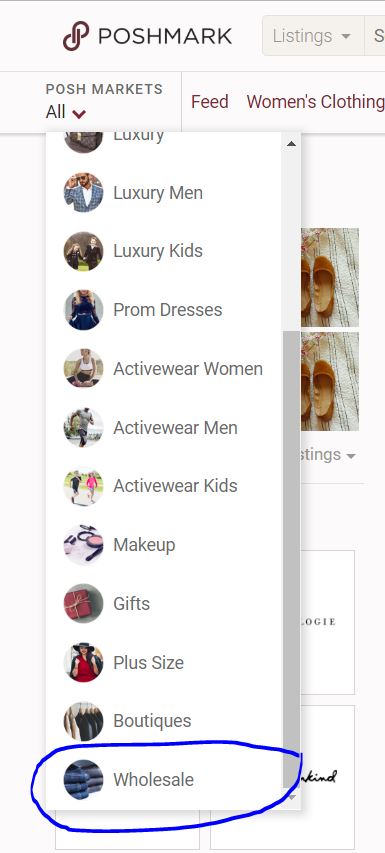
How to Access the Wholesale Market

Wholesale_1

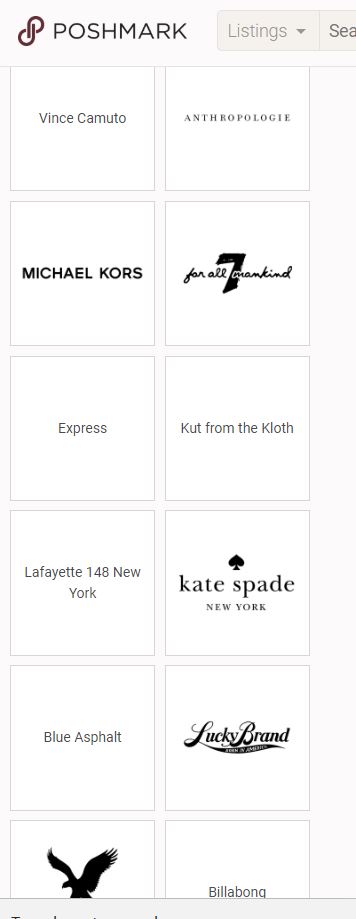
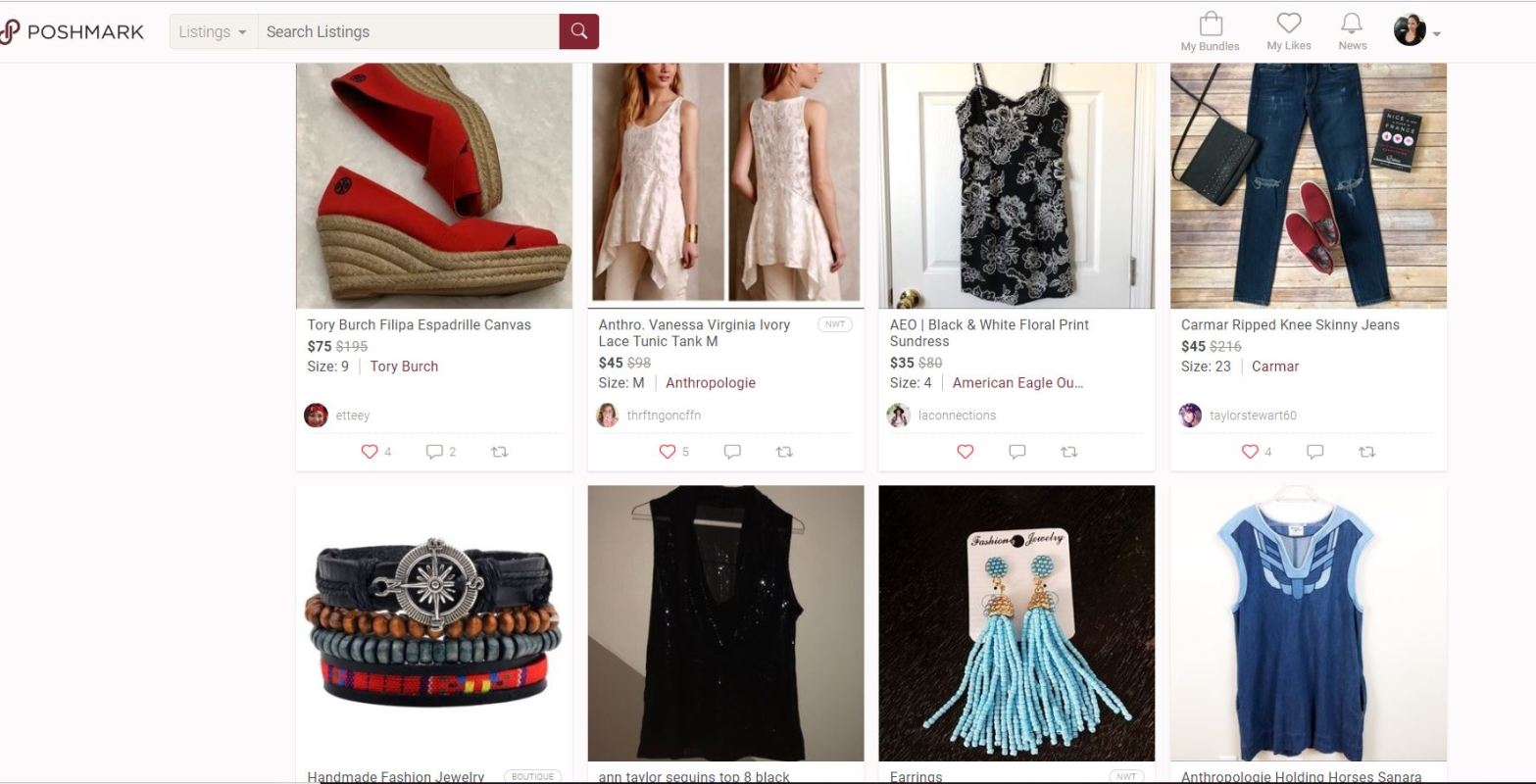
Browsing the wholesale market works the same as it does for the main market and uses the same interface, so there’s no learning curve when it comes to navigation. Like the other markets, you can filter by you preferred brands by searching for them in the search bar or selecting one of your most frequently searched or shared brands from the panel on the left (this feature is only available on a desktop).

Wholesale_FilterByBrand

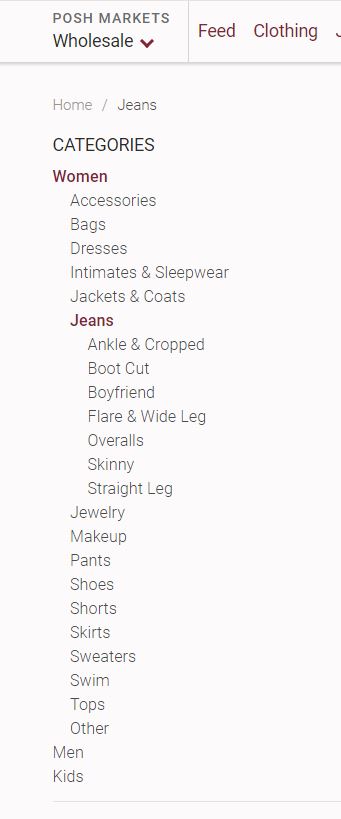
You can also filter by Category:

Wholesale_FilterByCategory.JPG

Wholesale_FilterByCategory_2.JPG

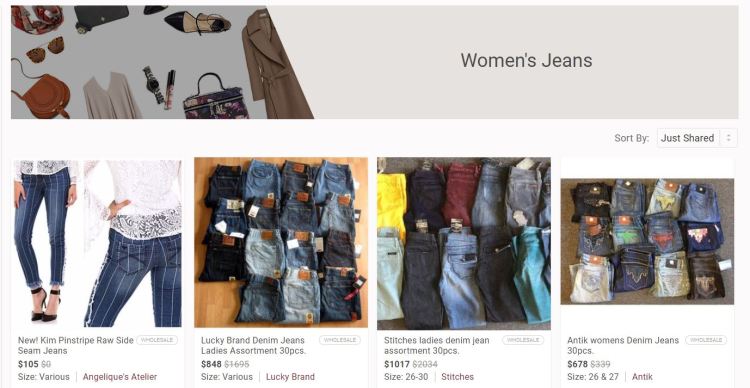
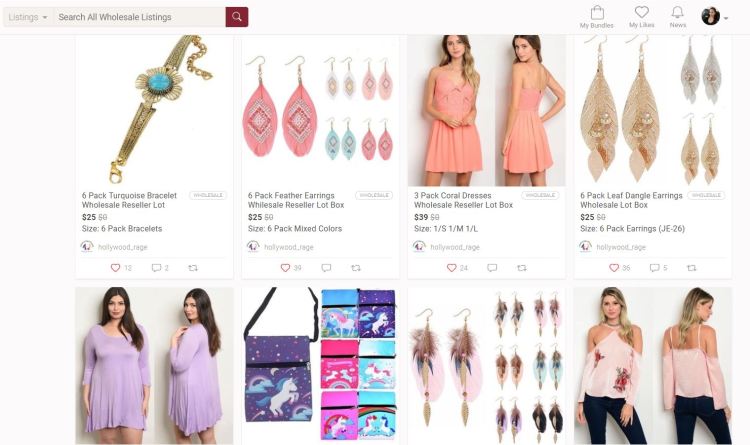
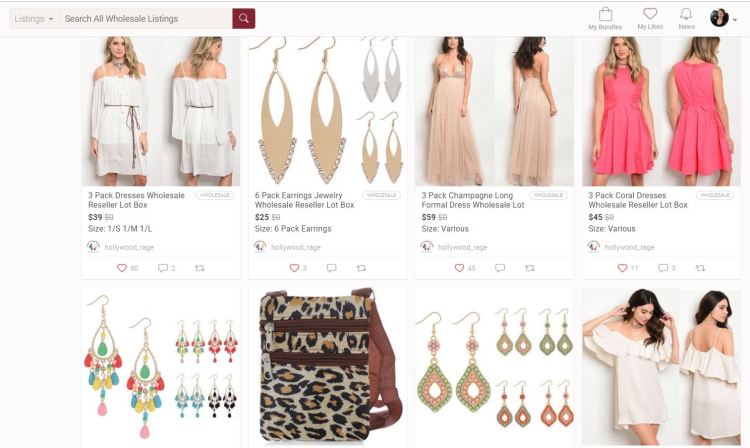
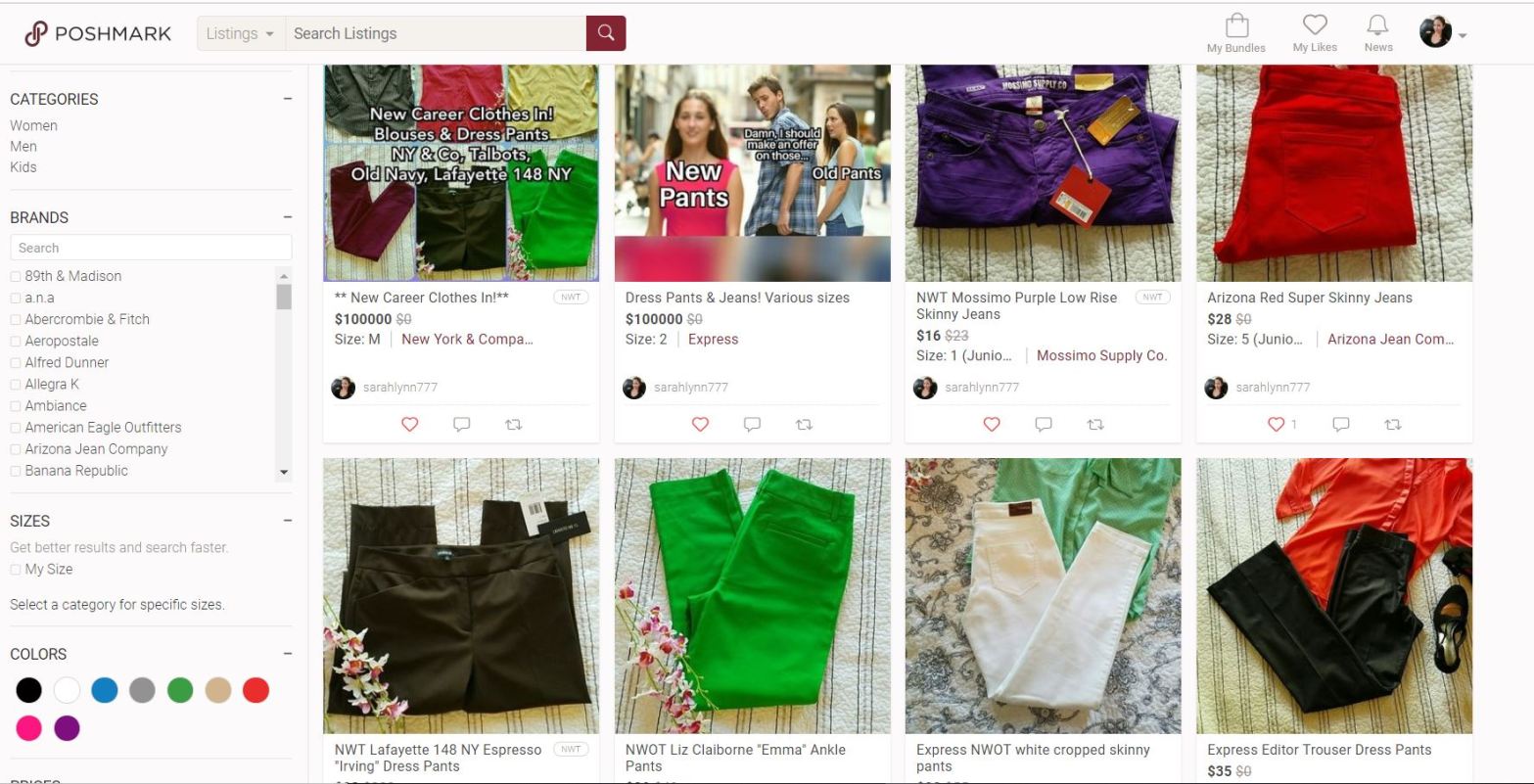
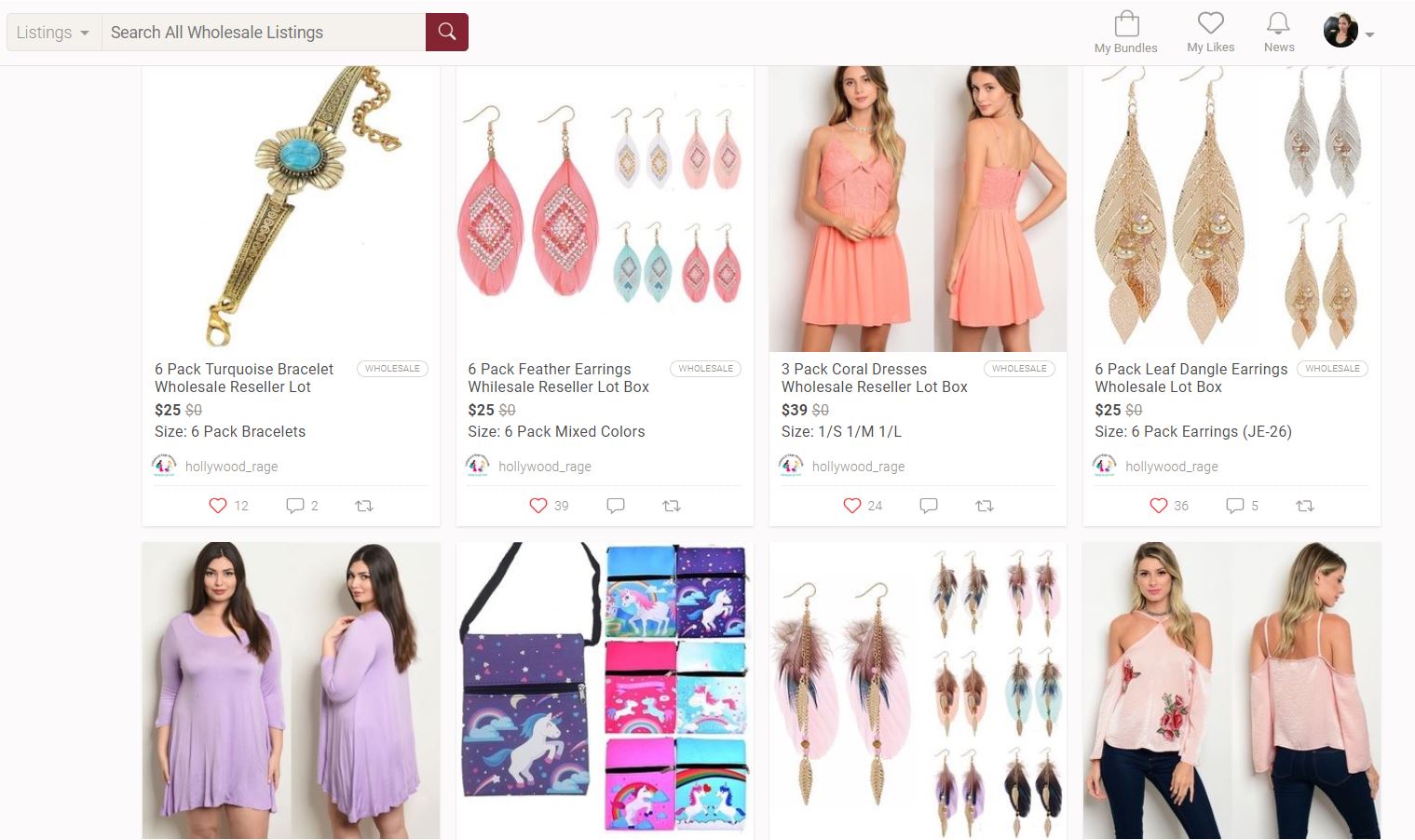
As you can see right off the bat, the prices for wholesale lots can be a bit crazy depending on what you search—in this case, you’d be better off picking for new and gently worn clothes at local thrift stores or even off-price retailers such as Ross or Marshall’s. It seems like smaller lots of seasonal trends by indie brands are more reasonably priced at wholesale, although the lots are typically smaller, and it’s a little harder to sell less-well-known indie brands at or near the suggested retail price. Also, Poshmark shoppers are usually not looking to pay retail.

Wholesale_2

Wholesale_3

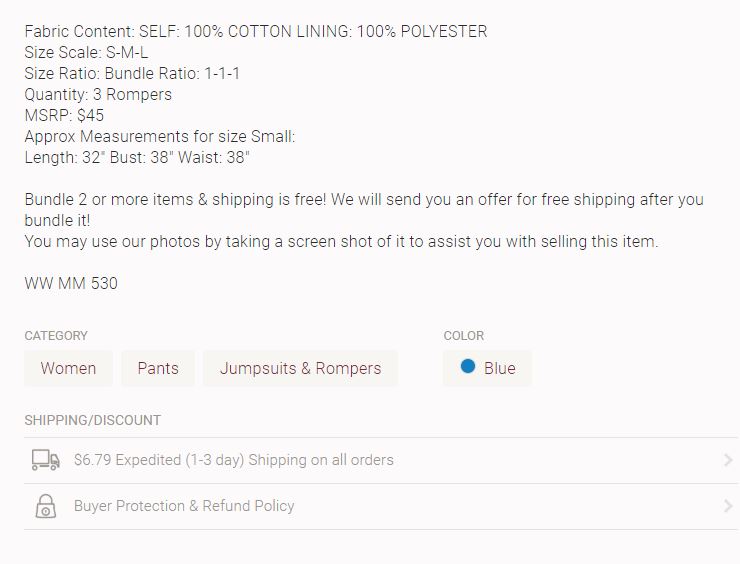
Descriptions for wholesale items should include the MSRP, or suggested retail price, and when offsetting the cost of the bundle of items, it sounds like a pretty good amount of potential profit.

Wholesale_5

For the example above, the price of the wholesale lot of three cute, on-trend dresses is $45, and the MSRP is $45 per dress. That sounds like a nice chunk of profit, but it could take a while for those things to sell, and there’s no guarantee that they will. It’s also common practice for Poshmark shoppers to make offers, and getting lowballed does happen quite frequently. Of course, that doesn’t mean you have to let your items go for lowball prices, but it’s good to keep this typical behavior in mind so you can set your initial prices accordingly.

My Conclusion

If you’re new to reselling and just need a way to initially stock your closet with some inventory to get the ball rolling, you can find some pretty good deals on really cute and in-demand trendy items in the Poshmark wholesale market. However, the mind-set of the average Poshmark shopper is to look for bargains or for items they can’t find elsewhere, and most shoppers make offers on items they like. From the browsing I’ve done in the wholesale market, I’ve concluded that it’s not for me; I’ve found more variety for much lower prices on brand new and gently used clothes and shoes in pristine condition by hunting thrift stores and other online resale apps. Especially right now with the spirit of spring cleaning and the Marie Kondo organization trend, people are donating their stuff at such a high rate recently that thrift stores are having trouble handling the surplus of inventory, which equates to more and higher quality finds for prices that are basically a steal. So if you’re looking to buy some inventory to stock or replenish your closet—whether that’s your resale inventory or your personal closet—now is a fantastic time to hit up some thrift stores, yard and estate sales, and other selling apps!

Resale Adventures: Poshmark vs. Mercari Part 2

A lot has happened since my last post about clothing resale on Poshmark and Mercari. Since then, I have achieved Posh Ambassador status, meaning that my profile is now recommended to new and existing users. Since reaching Posh Ambassador status about four months ago, I have seen my number of followers increase exponentially—from around 2,000 to my current 16,000+. I’ve also seen a marginal sales increase. I mean, it’s hardly enough to make a living—I do still love my full-time job—but it’s a nice side buffer I can put toward student loans each month [ugh].

Of course, my goal is to become more profitable eventually, but I’m still learning. It’s a lot of work, but if you love clothes as much as I do and actually enjoy doing things like hunting thrift stores, estate sales, and other seller’s apps to hunt for bargains on in-demand clothes, shoes, and accessories; lint-rolling, ironing, coordinating, arranging, and photographing outfits; and scrolling through photos of other people’s outfits and sharing your favorites with others, then reselling on Poshmark and Mercari could be a really fun and rewarding hobby for you! If none of that sounds fun, then you might want to consider some other way to spend your spare time.

Without further ado, here’s a comparison of Poshmark vs. Mercari for Resellers!

Poshmark

PoshmarkFeed

Poshmark has become a popular choice for both for selling your own clothes and any clothes you pick from thrift stores, off-price retailers, flea markets, etc., and for good reason.

Pros

  • Social sharing and linking social media accounts for increased visibility

Poshmark has always behaved as a social network that allows sellers to share their items to their Poshmark followers as well as their personal social media accounts. Now, members can leverage their status as social media influencers via the new Posh Affiliate program to promote listings in social media campaigns as well as earn money for recruiting new members.

  • Direct deposit your earnings to your bank account or use it to buy more stuff (this feature is the same for Poshmark and Mercari)

If providing your bank and routing number to a selling app freaks you out, however, you can also opt to have a check mailed to you. Woot!

  • Seller Protection: No Returns!

Once buyers receive an item, they have up to three days to inspect and “approve” it. Once approved, or after five days have passed with no response from the buyer, the money is released to the seller. In order to return an item, the item must be defective—not as described, undisclosed damage, etc. To dispute a purchase, a buyer must open a ticket, with photographic evidence, and have it reviewed. Buyers cannot return something simply because they don’t like it or it doesn’t fit.

It’s worth noting here that Mercari has the same policy.

  • The ability to check out using PayPal (this is available on Mercari as well)

This just makes things super easy for me when shopping, but it doesn’t make much of a difference either way as a seller because if you want direct deposit, you will have to provide a bank account and routing number regardless.

  • The ability to add liked items to bundles, both as a buyer and a seller

If a member likes multiple items in your closet, you can “style” them by creating a bundle of the listings they’ve liked. To make a bundle out of listings someone has liked, follow these steps:

Click on their profile, and then click the Bundle icon in the upper right—it looks like the user’s profile photo with a shopping bag in the lower right.

CreateBundle_Step1

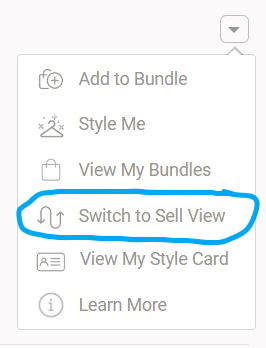
Once in Bundle view, click on the icon that looks like three dots in the upper right. A pop-up menu will appear; click Switch to Sell View.

CreateBundle_Step2

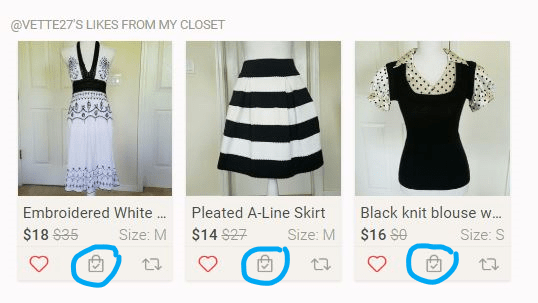
In Sell View, scroll down to see a list of items from your closet the member has liked. From that list, you can add one or all items to a bundle by clicking the Shopping Bag icon with a plus mark in the bottom middle of each listing. When the item has been added, the plus mark will change to a check mark to confirm.

CreateBundle_Step3

You can then choose to make them an offer, including the option to offer free or reduced shipping, which is deducted from the final sales price (i.e., your profit).

  • One Flat-Rate Shipping Price ($6.75)

While Poshmark tends to charge a bit more than Mercari after you’ve sold something (neither charges any listing fees), the flat-rate shipping fee of $6.75 covers anything up to five pounds, which means you can fit a lot into a box when we’re talking about clothing. This makes it easier to bundle items without needing to estimate weight and box dimensions, and the printable shipping label means you can just pop any small things in your home mailbox or any USPS drop-off location and hand off bigger items at a UPS store.

  • The buyer pays the shipping—usually

This is both a pro and a con. Since the buyer pays it, that means it doesn’t come out of you profit unless you make an offer to a buyer, in which case you’ll be required to also offer a shipping discount of either $1.80 or free.

A con to this policy is that it can deter buyers from wanting to buy smaller items, such as makeup and jewelry. I list those smaller items on Mercari because you are able to choose a sipping option of $4.25 for anything under a half pound and $5.25 one-half pound to one pound.

  •  Mass Listing-Sharing Parties, called “Posh Parties”

Like I said, Poshmark behaves like a social network, and Posh Parties is another way the app leverages people’s affinity for fashion and scrolling through themed lists of cute stuff we can curate into wish lists. Here’s how it works: four times per day, Poshmark hosts themed “parties,” during which time you can share any listings in your closet that fit the theme. Rather than only your followers seeing these listings, anyone following the party will see them. Listings shared in Posh Parties also show up in members’ regular news feed.

Cons

  • The seller’s fees are a little on the high side

The seller’s fee is 20% of the listing price for anything over $15 and a flat fee of $2.95 for anything under $15 (Mercari charges 10%). While this might seem kinda high, Poshmark’s numerous Seller’s Tools and the list-sharing behavior that enables constant self-promotion does help make up for it.

  • One flat-rate shipping fee

Poshmark’s simplified shipping rate can come at a price vs. Mercari. While $6.75 is perfect when you’ve sold a bundle of five dresses and a pair of shoes in a big box just under five pounds, it’s a bit expensive for lower-weight items such as jewelry, makeup, and bras vs. Mercari, which offers multiple shipping options based on weight.

  • Limited flexibility in communication

To communicate on Poshmark, you have to leave a comment on a listing and use @ to get a specific posher’s attention, and all these communications are public. This makes it harder to negotiate prices privately. It also means it’s not possible to communicate an issue privately.

Poshmark Takeaways

While Poshmark charges a higher seller’s fee than Mercari, they offer a multitude of seller’s tools and boast a powerful social-sharing platform that enables “poshers” to reach a wider audience within Poshmark and for social media gurus to leverage their influencer status to run social media campaigns. Shipping is a flat rate of $6.75 and includes anything up to five pounds in weight. Paired with the bundling options, this makes Poshmark a great app for selling multiples in a box for a low flat rate. The buyer pays shipping, unless the seller makes a private offer to the buyer.

And finally:

Warning—Shameless Self-Promotion Ahead

If you’re interested in signing up for a Poshmark account, you can use my code (username: Sarahlynn777) and get a $5 coupon on your first purchase. That’s your first purchase of anything, not just my stuff. 😉

I should also disclose that if you sign up for a Poshmark account using my code, I will receive $5 from Poshmark after your first purchase through the app. Again, that’s if you purchase anything from anyone, not just something from my closet.

Mercari

Mercari

Pros

  • The ability to sell a wider variety of items

While Poshmark is limited to fashion (e.g., clothes, shoes, makeup, handbags, and accessories), you can sell a huge variety of items on Mercari, and with private shipping options, that even means big items such as furniture. It kinda reminds me of eBay without the anxiety of dealing with auctions. Like Poshmark, you can make offers on items as either a buyer or a seller.

This is the sweet spot!

This makes Mercari ideal for selling small items, such as jewelry and accessories, DVDs and video games, that old Apple cord you have lying around, and makeup samples.

  • The option to offer free shipping

Sometimes you just want to offer free shipping to entice more buyers. Also, Mercari allows buyers to filter their searches by free shipping, so your listings are twice as likely to sell (according to Mercari’s website) if you offer free shipping. Flexible shipping options also make it easier on your wallet to offer free shipping for items weighing less than one pound. You’ll also want to consider offering free shipping on high-ticket items to further persuade buyers and increase your listing’s visibility in searches within the app.

  • The ability to send messages directly to users

Mercari uses a text-message interface to communicate with buyers directly rather than users having to leave a comment on a specific listing as with Poshmark. This makes it easier to negotiate prices as well as deal with any issues without an audience.

  • The Interface

Mercari’s seller’s interface is stupid-easy to use. After you type a title and description, Mercari is pretty good at providing accurate suggested categories and subcategories by sourcing the details you typed into the title and description—for example, well-known brands will auto-fill rather than having to type them into a search bar.

  • The ability to upload multiple photos at once

I’m not sure why this is still not a thing on Poshmark.

Cons

  • No sharing; “promoting” means you must lower the listing price by at least 5%

While Poshmark allows you to share your listings to your followers as well as anyone perusing a Posh Party, the only way to share your listings on Mercari (thus bumping them up in the results so they’ll stay visible) is to lower the price each time, and you are only allowed:

  1. ten promotions per day, and
  2. one promotion every three days per item.

This can get annoying because the only other way to “refresh” your listings is to relist them as new.

  • The search filters are a little wonky

When you search for specific items, the default is to show both items that are for sale as well as sold items. You can change this by using the Filter settings, but it’s a little strange when encountering it for the first time. This function does serve a purpose for sellers, however. By searching Sold listings, sellers can get a gauge of the pricing competition.

The size options can also be a little odd because you pick sizes ranges. For example, something sized as S can be a 4 or a 6, and a M can be an 8 or a 10. So sellers have to be mindful to be more detailed about sizing information than on Poshmark, where size categories are more literal and straightforward. I have gotten into the habit of simply providing all the standard measurements in all my descriptions: waist, inseam, rise, shoulders, armpit to armpit, length, etc., or providing photos with the measuring tape laid out on the items.

Mercari Takeaways

Mercari’s simplified interface makes listing your items fast and easy, and with a variety of shipping options, including individual shipping, you can sell virtually anything. Private messaging allows you to communicate directly with your buyers without needing to use a commenting system. While Mercari charges half of what Poshmark does in seller’s fees, Mercari doesn’t benefit from the social networking and listing-promotion options Poshmark boasts. Mercari is likely a better option than Poshmark for selling items that weigh up to one pound.


How I Got Started with Poshmark Resale

I first got into resale when I was 18. eBay was in that phase when there were still commercials on TV and DVRs weren’t yet a thing nearly everyone had at home. I had just quit my waitressing job and needed something to hold me over while I studied for finals. My bills were minimal; I still lived at home and paid only for my car insurance, gas, and cell phone. So I started experimenting with eBay on my laptop.

I started out by perusing the interface and snooping in on auctions to get a feel for the types of things people sell and how much people are generally willing to pay. As an 18-year-old with waitress pay, I didn’t have a whole lot of stuff I’d call “valuable” that I was willing to sell, so I listed mostly clothes before moving on to CDs, DVDs, video games, textbooks, and whatever else I could find that I’d seen sell in an eBay auction.

I started with my prom dress. I had taken a couple photography classes in high school and college and had a digital camera—a Canon PowerShot with five whole megapixels [insert laughing/crying emoji]—and a tripod, which I used to take a few photos of myself wearing the dress, along with some close-ups of the tags and beading, and listed it. It ended up selling for around $80. $80 for a dress I wore once and that had been clogging my closet with its sheer big-ness. So then I went through all my reject clothes—the impractical, “aspirational” stuff I bought and never wore—and listed those. They almost all sold. I got nearly $120 for an old algebra textbook that I bought originally for $70!

Then I got the fever. I grabbed anything and everything I didn’t want anymore, took tons of photos, and opened an eBay store. I silently laughed at students who used the school bookstore’s book-buyback program, which would only get you maybe $5 for a book you paid $100 for.

At 18/19, I was no master of the trade; I was just messing around, trying to see if I could possibly manage to support myself and get through college with just an eBay store. For a teenager living at home and going to college nearby, I paid my way for about six months just by selling all the crap I didn’t want in my little eBay store.

Well, not all the crap, but most of the crap.

Fast-forward to about a year ago when my friend told me about Poshmark, an app where you can easily buy and sell clothes on your smartphone (oh, the hours I would’ve saved at 18 if smartphones had been a thing)! Initially I just used it to buy stuff. I had recently put some weight on and needed to size up some of my pants. I found some awesome deals on Express jeans and work clothes, mostly new with tags, and some shoes. I then realized that, like I did when I was 18, at least more than half of my closet was filled with stuff that either didn’t fit or made me feel frumpy. Many of these things still had tags. I had at least five pairs of shoes that I’d worn once or twice or never. So I started listing them.

My intention in the beginning was to simply replace all the clothes in my closet that were ugly or too small with stuff that fit and looked good on me. I would wait until enough of my stuff sold that I could use those credits to buy “new” things on Poshmark.

Eventually, it got to the point where I had replaced all the clothes I needed and still had a balance of about $50 left over, so I linked my bank account and transferred it over.

Then I started accumulating a balance almost every week, so I made a spreadsheet. In just a few months of casually listing stuff I didn’t want, I’d sold about $200 and replaced about half my wardrobe with new stuff I loved, with only a few purchases getting relisted for being the wrong size. That’s not a lot of profit, but it was enough to motivate me to want to get more serious.

It’s Not For Everyone

One thing you need to know up front if you’re considering online resales: It’s not for everyone. It’s a lot of work—frankly way more than I thought it would be. And all that work is necessary if you want to see any sort of actual profit.

The work doesn’t stop at listing your item. If you want to be serious, you’e going to have to do so much more, including sourcing more items when your personal inventory inevitably runs out, learning a bit of photography if you’re not well-versed, sharing or otherwise promoting your listings to attract more buyers, running the occasional sale to entice more buyers, and don’t forget about shipping!

You’re going to have to make time to go to the post office, FedEx, UPS, etc., quite often. You’ll also have to deal with the occasional buyer who sends you message after message asking where their stuff is even though they have a tracking number and you have no control over the shipping process once the item leaves your possession, which can be very annoying! (Just keepin’ it real.)

I’ve always loved fashion, though, so spending some time every day scrolling trough cute clothes and clicking Share is a fun time for me. It’s kinda like scrolling through Pinterest and doing nearly the exact same thing for free.

General Resale Tips

Photography

Photography is everything. If your photos look like crap, no one will want to buy them. This should be obvious, but sometimes we think that, because we’re listing used stuff online, people should assume it’s not going to look like it would in a fashion catalog.

But at the same time, you still want people to find your stuff enticing, right. Otherwise, why tf would they buy it?

Every time you take a photo of something you plan to list, stand back and look at it objectively. Would you want to buy it? If the answer is no, then you need better photos. Try browsing Pinterest boards for inspiration.

Natural Light Is Your Friend

The last thing you want to do is take a photo of something hanging limply on a hanger in a dimly lit room at night. I guarantee you that photo will look like sh**. Anything white will be yellow, and ugly shadows will distort the shape.

If you don’t have special lighting for indoor photography, it’s best to take all photos in the daylight. I lay mine flat on my bed—ironing them first, if necessary—over a neutral-colored bedspread and open all the windows to let in the natural light.

Be Pinterest-Worthy

You’ve seen photos of clothes on Pinterest. Mimic what they look like. Arrange little outfits so shoppers can see what’s possible with the garment you’re selling. Make them look shareable.

General Poshmark Tips

Be Social

Poshmark is designed to work as a social-sharing platform. You follow people and share their stuff, and they follow you back and share your stuff. Sharing increases your closet’s exposure and bumps your items up in searches. This also means you have to spend some time on the app—five minutes here, ten minutes there—sharing your stuff as well as stuff in your news feed.

Sharing is Caring. It’s Also Branding

Poshmark recommends new listings based on your in-app search history as well as the things you list for sale, your likes, the people and brands you follow, and especially the things you share. That means you don’t want to just mindlessly click the Share button for no reason. Only share things you really like and would actually wear yourself.

Definitely share your own stuff on a regular basis, especially at night, which is prime online shopping time! Poshmark  regularly hosts themed “parties” where sellers are encouraged to share all their theme-appropriate stuff, and those parties are great opportunities for more exposure and more followers, shares, and likes—which ultimately translate to more sales.

Don’t Be Ridiculous

Meaning don’t price your stuff unreasonably. The mind-set of Poshmark shoppers is to find great new or gently used brands at a bargain. We can call secondhand shopping by whatever cutesy euphamism we want, but it’s still secondhand shopping. Things that are new with tags are expected to at least be off-price; think TJ Maxx or Ross. Why would someone want to buy your secondhand item online and wait for it to be shipped to them at retail prices when they can just go to an off-price store?

Which brings me to my next point…

“Pick” Appropriately

Your personal inventory will not last forever. If you’re serious about online resale, you’re gonna have to go picking at some point to replenish your inventory.

DON’T Go Picking at Off-Price Stores

…such as TJ Maxx, Ross, Marshalls, and others. To reiterate, buyers on these types of platforms expect items to already be off-price, so sourcing items from off-price retailers doesn’t make sense. Your margins won’t be good enough to turn a profit, and pricing items at MSRP won’t get you many serious buyers, but it will get you a lot of lowball offers.

What About Poshmark’s Wholesale Market?

It doesn’t take much to “qualify” to buy things from the Poshmark wholesale market, which sells bundles of clothing by indie brands for sellers to resell as “boutique” items, but are they really worth it?

These wholesale items will come with a suggested MSRP, but those suggested prices don’t generally fall into the realm of what the average Poshmark buyer would be willing to pay for something by an unknown brand unless it’s something really on-trend. I have seen some pretty cute holiday-themed stuff.

Personally, I don’t see much potential for the wholesale market. How it works is you buy a bundle of items and then list them for sale at whatever price you want up to their suggested MSRP as Boutique items in your closet. You may or may not be able to use the same photos the wholesaler uses on Poshmark. Lots of people see this as a good way to make a profit, but don’t forget that most buyers make offers rather than click the Buy Now button. Admittedly, very few of my sales have gone for the actual price I listed them for (which is why I list them a little higher than what I really want in the first place—offers are expected).

I mean, you can say “Price is firm!” in your listing, but it’ll come across as rude, especially with the exclamation point.

If you are a boutique seller on Poshmark, I would be interested in hearing your own experiences!

Better Ways to Pick

Go Thrifting!

Hit up thrift stores in high-end locations. This is a no-brainer for the most savvy resellers.

For the best chances of success, avoid going on weekends. Those are the busy days, and employees typically don’t restock their donations on weekends. The best time to go thrifting would be the first half of the week. [I usually go on a Tuesday after work.]

Spring is the best time of year to go thrifting because people are inspired to get rid of as much stuff as possible during spring cleaning, and this motivation makes them less likely to care about the brand or quality of the things they donate; all they want is a clean closet.

Thrift stores such as Goodwill and Salvation Army, as well as any mom-and-pop stores that don’t use the words “vintage” or “consignment” in their names, are the best places to source items. This is because they operate wholly on donations and don’t check for things like brand and quality. These stores have “departments” with uniform prices for all items of the same category (e.g., $4 all jeans, $5 all jackets, $6 all shoes).

Use Other Selling Apps

Another thing I do is search for “bundles” of items on other selling platforms. I search for quality, well-known brands in excellent used condition or that are new with tags. Look for motivated sellers listing “bundles” and “lots.” These types of sellers just want to get rid of lots of stuff and are less concerned with profit.

I usually use Mercari for this. I’ll search for “bundle” or “lot,” filter it by Women and For Sale, and further refine the price range to up to something like $30 or $40. Using this method, I got a bundle of six pairs of new Hollister jeans for $27 and free shipping and a bundle of six juniors mini dresses, 5/6 new with tags, for $16.

Also:

Don’t Put All Your Eggs In One Basket

If you plan to be very active with your phone and other selling apps, you can be like me and list the same item(s) on multiple platforms. Currently I only use Poshmark and Mercari (and occasionally eBay, depending on what I’m listing). This method increases you stuff’s exposure to more buyers who prefer different platforms.

The reason I say to only do this if you plan to be very active on your phone is that you want to minimize the chance of different people buying the same item on different apps while you were “away,” and now you can’t fulfill one of the orders. Once something sells on one platform, you’ll want to be around to unlist it from the other(s) so this doesn’t happen. You don’t want angry or disappointed customers!

Each platform has its own pros and cons, so you’ll have to do your research, but they all share a few commonalities to consider, such as:

…Sellers Fees!

They exist. It’s how the apps make money. They vary by app but are typically small. You’ll have to do your own cost-benefit analyses to see which apps make the most sense for what you’ll be selling and how active you intend to be.

Shipping Fees

Those are also a thing, so make sure you research the options and make a decision whether it would be worth it to offer free shipping, if you use an app that gives you the choice, such as Mercari.

Poshmark will occasionally offer free shipping on items you put on sale (i.e., drop the price on) to further entice buyers, but in general, the buyer always pays for shipping on Poshmark; Mercari offers you the choice to offer free shipping, which comes out of the final sale price. Personally I only offer free shipping on stuff I really just want to get rid of.

How Mercari Differs from Poshmark

Mercari has a very easy interface and allows you to offer free sipping for shoppers. You can also sell a larger variety of items on Mercari versus Poshmark, which is fashion-focused. One thing that bothers me about Mercari is that, while on Poshmark you can share items with your followers for more shares and visibility, the only way to “promote” your stuff on Mercari is to keep lowering the price. That combined with the seller’s fee and any associated shipping costs can really eat into your margins.


Improving the First-Generation and Nontraditional College Experience

A first-generation college student (FGS) is a student whose parents possess no formal college degree. Although many FGSs are also low income or ethnic minorities, but that’s not always the case; many come from a rural background raised by wealthy parents in successful trade occupations. Regardless of socioeconomic background, however, being an first-gen student can be overwhelming and, at times, quite isolating—especially if you’re also the only one of your high-school friends to attend college or to attend the same college together.

Additionally, college differs from high school in numerous ways that first-gen students are usually unaware of, and when they attend large public universities with thousands of students, they might encounter difficulty finding information and supports specific to their situation. They also might struggle to figure out how and where to find general student resources that other students are more privy to due to having been mentored and prepared for college by their savvy parents or relatives.

Jargon is one example of a major difference between high school and college. Take, for instance, office hours. Most traditional college students are familiar with the idea that office hours are mostly used for networking—building a professional relationship with professors and peers that can be leveraged later when seeking graduate school or employment recommendations, internships, research and teaching-assistant opportunities, graduate apprenticeships (i.e., a graduate teaching assistant who gets paid a stipend, which sometimes includes medical insurance, as they work through their graduate degree), and much more.

I did not know this. I didn’t know any of this, in fact, until after I graduated with my BS. In high school, you only attended office hours if you were struggling in a class and needed help or to request an extension on an assignment. Naturally, I assumed the same applied in college, along with the additional preconceived notion that my professors were these super-busy, untouchable important people and that using their office hours for chit-chat about our shared interests in our field of study would be “bothering them.”

In recent years, more attention has been paid and efforts accelerated to improve student support services for certain demographics, first-generation and other nontraditional students among them. A huge driver of these efforts is the influx of nontraditional students enrolling in online degree programs. Nontraditional students in general, whether they are FGS or not, typically need more supports to succeed in college. They might be from an older age demographic that never took algebra in high school, or they might be a younger student who took a gap year or four and just needs a refresher on certain topics that maybe just weren’t their strength in high school.

Remedial Education Alternatives

The main solution to this has been to enroll unprepared students in remedial courses before they’re able to take their actual college-credit courses, but this has remained a barrier for students for multiple reasons, high among them being the additional cost  and time-frame until graduation.

To help assuage these barriers for nontraditional students, colleges are experimenting with revising the remediation route, with options ranging from colleges enrolling students in regular degree-granting courses alongside additional tutoring and services to get them up to speed, called corequisite remediation. Some colleges have made remedial courses optional or even eliminated them altogether, an extreme move that has its fair share of skeptics.

Recent Research and Trends in Universities

The Chronicle of Higher Education recently published a Focus piece on first-generation college students. (You might need a Chronicle account to see the entire piece, but I’ve linked to some of the individual articles throughout this post and included the rest of them at the end.)

The third article in the compilation, “Micro-Barriers Loom Large for First-Generation Students” by Eric Johnson, opens with an anecdote about JD Vance, author of Hillbilly Elegy,  detailing the crucial moment—a seemingly innocuous formality in Stanford’s law school admissions application—that led to him to Yale’s doorstep instead.

The formality was a request for the signature of Stanford’s dean, a woman Vance had never met and thus did not feel comfortable bothering for such a minuscule favor. Since Yale’s applications included no such request that he reach out for help from a high-ranking authority figure who is also a total stranger, he was accepted there instead.

As Eric Johnson explains in his Chronicle piece,

Self-reliance is a cardinal virtue in Vance’s world, where bonds of kinship and trust take years to develop.

This is often a mind-set of first-generation students. Where they come from, work ethic is a high virtue. Independence is taught from an early age, and responsibility and self-reliance are celebrated and bragged about. The earliest and most sage piece of advice  my mom gave me as a child was to “never depend on anyone but yourself.” I quote this still.

Granted, this was said to me shortly after my parents’ divorce, so now that I’m grown and married, I take it with a lot more salt. But I remain fiercely proud of my independent mind-set and thank my mom for instilling it in me.

But I digress.

When someone from a working-class family goes to college, the expectation from family is often to go become a doctor or lawyer—something that’s lucrative and whatever their idea of a better life is. A liberal arts degree and subsequent career in public service or academia isn’t usually what they have in mind, and that can lead to bafflement and dissonance. Parents and friends back home feel like their child or friend left for a few months and came home a different person. Students suddenly feel like outsiders in their own communities and homes; like strangers among the people they care for most deeply. When back in school, they struggle to navigate a foreign landscape full of strangers and no nearby support system of people slightly more in the know than they are.

It can be isolating trying to navigate knowledge gaps—the unwritten and oft-assumed rules of success in higher education—on your own. These are things no one thinks about, such as that it’s not only okay but expected that engaged, serious students will ask for things when they need them; that they will advocate for themselves.

Yes, this includes things like asking for extensions on assignments when there’s an emergency or you’re simply overwhelmed, asking for clarification on a challenging concept or assignment, or even just needing a sympathetic ear when you’re struggling and feeling lonely and homesick.

Also know that it’s never not a good idea to stop by your favorite professor’s office when you feel like saying something like, “Your recent lecture blew my mind! I’ve read [insert assigned reading], and if you have some time, I’d be interested in hearing more about [insert specific topic of interest”]. Anything that shows you were listening and engaged. Professors love that shit!

The simple fact is to realize that professors are, above all, people. That you are not “bothering” the almighty professor by dropping by for a chat. That that’s their job, and they expect you to do these things.

That if you don’t do these things, they won’t remember who you are a few years later when you ask for a recommendation letter to grad school—even if you did have the highest grade in their class.

Of course, the concept of office hours is only one example of the unique, often hard-to-pin-down issues that face nontraditional students. Other issues can include access to scholarship information and other forms of financial aid for low-income students. Many

Some colleges and universities have already implemented programs specifically designed to address retention issues and other obstacles nontraditional students face in college.

My ultimate goal is to spearhead and implement one of these programs at work, so I want to hear your own experiences!

  • If you are or were a first-generation or other nontraditional college student or graduate, what are some of the knowledge gaps that you didn’t realize you had until halfway through your program or [worse] after graduating?
  • Were there any professors or staff who helped you in some significant way? How?

I want to know all about your struggles, successes, failures, accomplishments, and proudest moments as a first-generation college student. I want to hear about your experiences either going home or not going home for the holidays.

  • Did you move back home after graduating? How did that go?
  • Did you move somewhere else?
  • Did you work through college? Struggle with anything specific?
  • Not struggle at all?

Tell me!

Leave your experiences in the comments! Nothing is TL;DR. 

Resources

[In the order they appear in the Chronicle of Higher Education‘s In Focus compilation]


The Feelings Wheel

This one is a little more personal. But don’t worry, it’s not too personal. You will not need tissues.

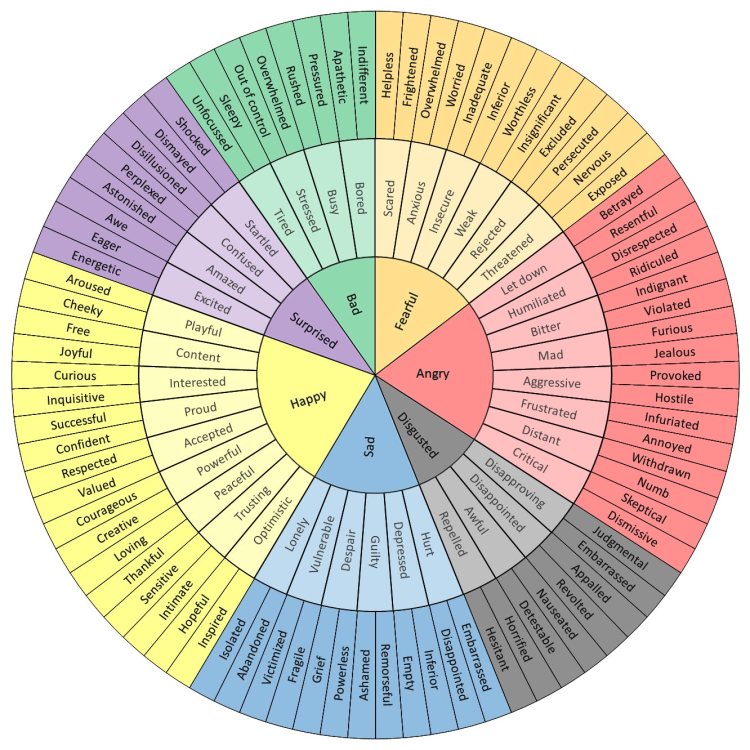
At work the other day, I was approached by a colleague who is in the second year of his health and family counseling master’s degree program. He handed me a printout of a feelings wheel—a circular wheel with words for specific emotions, with the six most basic and universal in the center and four additional rows spanning outward with adjectives of increasing complexity and specificity.

feelings-wheel

Borrowed (temporarily and without permission) from Geoffrey Roberts.

“My graduate advisor told me I need to work on my feelings words in counseling,” he said. “I know you’re not much into talking about your feelings, either, so maybe this will help you, too.”

I laughed. “How did you know?”

“Pfft. Come on,” he scoffed.

It’s true; as a female INTJ, I have always struggled with identifying and expressing my emotions in words. One day, I came home from preschool and told my parents and grandmother that I didn’t want to go back anymore. They asked me a series of probing questions to figure out why from my vague response that I didn’t want to see Miss Jodie, one of our young, bubbly teachers, anymore, but I couldn’t articulate an answer.

“Was she mean to you?” No. “Did she hit you?” No. “Did she yell at you? Punish you? Blame you for something you didn’t do?” No, no, no. I just didn’t want to see her anymore. I didn’t know why; I just didn’t want to go back to preschool.

My mom thought it was because I didn’t like being made to take naps, which was also true, but not enough to make me not want to go back to preschool at all; I did usually have fun there. My dad thought I was using not liking Miss Jodie as an excuse because I wasn’t ready to leave the comforting company of my grandmother, who’d babysat me, along with a couple neighborhood kids, since I was a toddler and my parents had to work. That might’ve been true as well, but what I was really feeling toward Miss Jodie was intimidation. It was my very first confrontation with the the awareness that I’m not like other little preschool kids. Even at the age of four, I already felt like my mind worked differently and I didn’t quite fit in. And it was obvious to me that Miss Jodie, although very bubbly and sweet, was not like me. I could already tell the she was one of the “cool kids,” and I could already tell from among the toddlers who the future “cool kids” were, and I couldn’t help but notice how Miss Jodie gravitated toward them and not me. It was a painful realization that I was not, nor would I never be, a cool kid myself, and so I wanted to go home.

I also struggled with regulating my emotions as a child without going completely ape. Luckily, with age and a master’s in psychology came training in recognizing situations that might trigger an emotional outburst and develop appropriate coping mechanisms to get through them without flying off the handle. I am forever grateful for this knowledge. I probably would’ve benefitted from receiving this informative little wheel as an elementary-school kid, but it’s better late than never.

Sidenote, and just out of curiosity, how far back in your childhood can you remember? Are you able to remember long-ago experiences with freakish accuracy? Do you know your MBTI type? You can take a free version of it here! [Disclosure: this is not an empirically validated test and should only be used for entertainment purposes as an aid to help you on your introspective journey.]

The Controversy Surrounding Two Spaces vs. One [After a Period]

 Cover photo by Linkedin in Business

People can have some seriously staunch opinions regarding the new[er] convention of using only one space after a period versus two.

I had no idea something so seemingly innocuous could induce some people to such passionate emotions. Such defiance and outright denial.

“You can pry my double spaces from my cold, dead keyboard!” proclaims my husband, arms crossed, feet planted.

“You’ll show your age,” I offer.

“Ha! Ridiculous. Everybody uses double spaces. It’s the right way.” This is what he was taught since elementary school, he goes on. Since the days of the Tandy!

“I don’t care what these lazy young people say, you can’t just change the rules of grammar!” argue the Gen Xers and Baby Boomers. And they don’t want to hear what you Millennials and Gen Zs have to say about how typewriters are obsolete, either. They know that. They, like you, have been using computers exclusively for over two decades. They’re not that old. They used double spaces back then, too—on the computer—and will thus continue to do so because “it just looks better with two” or “it helps with reading” or “it’s still the rule” or “their teachers would mark them off if they didn’t, so it’s obviously the right way.”

You can try to cite the Chicago Manual of Style 6.7:

In typeset matter, one space, not two, should be used between two sentences.

But it will fall on deaf ears.

You can go on to cite the Associated Press Stylebook:

 Use a single space after a period at the end of a sentence.

You can talk about typography all you want. You can prattle on about how the double-space convention was used to help guide the reader’s eyes when viewing monospaced font. You can go on to explain that this practice not only antiquated and unnecessary but aesthetically displeasing because it creates weird “rivers” of space in your typeset copy  when paired with the now ubiquitous proportional fonts.

But care they won’t.

It’s not just that it’s “a hard habit to break,” either; these staunch two-spacers have firmly held beliefs about the virtues of double spaces that they hold on to with religious-like vigor.

Oddly, I don’t remember ever having been taught the two-space convention in school (with the exception of APA style, the only remaining style guide that continues to proscribe it, but that wasn’t until college, and it still wasn’t enforced), yet I still see people younger than I am proclaiming that it’s the way they were taught.

For editors, the solution to fervent double-spacers is simple: use the Word macro to find all double spaces and replace them with one before editing even begins. If you edit for a publisher, the rule is firm; no need to cite it. The publisher won’t accept it another way or will simply fix it themselves in design.

Editors Need Editing Too

Cover photo by Bruce Mars, People

While most people think of copyeditors as judgmental, uptight, red-pen-wielding tyrants seeking too mark up an author’s art until it no longer resembles itself, that’s not true! A good copyeditor’s goal is to make the author’s work shine, not to attempt to overshine it with subjective and unnecessary style-preference changes.

Many editors are also writers, and those are the ones who understand that even their work is not perfect—not even close. An editor/writer often gets stuck in vicious cycles of revision—refining something here, fixing a typo there—over and over so they never finish anything or get published and have to resort to blogging [ahem]. And when editor/writers hand their copy over to another copyeditor, you can be sure it never comes back clean.

Everyone gets blind to their own work. I, for instance, have an affinity for super-long, intricately punctuated sentences. I tend to ramble at times. I sometimes struggle with articulating my thoughts as concisely as I’d like to, and I often need someone to reign me in—gently—by telling me when I make no sense.

As the creator, your work is your baby, and you’re too close to it to be able to make objective criticisms the same way a copyeditor can. A huge portion of copyediting entails putting yourself in the shoes of the intended audience and serving as an objective second set of eyes.

If you’re writing about a complicated topic on which you are an expert, for example, a copyeditor unfamiliar with your area of expertise can let you know if you’re explaining complex topics in a way that flows logically and makes sense. They can also let you know if there are any areas that need clarity or further explanation.

Conversely, you might want to know if the plot of your fantasy fiction series becomes too convoluted or contains unintended inconsistencies, contradictions, or anything else that might make your story difficult to follow.

Also, let’s face it: writing something, especially a manuscript, takes a lot of hard, metaphorically backbreaking work, and we don’t always proofread when we’re done when we feel like we’ve already proofread over and over while writing and rewriting. But we will never “get” everything. Every editor and every author will always find something to change every time they revisit a piece of work. It’s just what we do.


Why Are We Still Hating Singular “They”?

Cover photo by Karolina of Kaboompics

In 2018, I’m not really sure why singular “they” is still not acceptable in formal writing when it has been used for hundreds of years in spoken as well as written English with no one, save the occasional uptight pedant or haughty English teacher, batting an eye. Tom Freeman of Stroppy Editor provides an impressively comprehensive history of its usage by prolific authors since Middle English—including Shakespeare, Chaucer, Swift, Fielding, Austen, Defoe, Byron, Thackeray, and Shaw—in this article.

Over the last several decades, many people have tried, albeit unsuccessfully, to introduce a gender-neutral singular pronoun, such as the failed “tey,” (p. 162) “ze,” and “hir” (p. 10). I don’t want to get into the linguistics of that, but let’s just say that attempting to get all English speakers on board with a sweeping change to the language at the grammatical level is not an easy task.

LBGTQ-rights arguments aside, it’s more of a case of accuracy and avoidance of pedantic, stuffy-sounding writing for me. I’m not sure anyone can honestly say that the “his or her/he or she” construction doesn’t automatically ruin any piece of prose by its sheer clunky awkwardness [but feel free to attempt to change my mind in the comments!] Most style guides recommend other workarounds, such as the less awkward but arguably more stilted “one,” but … eww.

Because resorting to “his or her/he or she” is, at least in my opinion, just ugly—or, in others’ opinions, lazy or no longer even the proper PC choice due to its adherence to a gender binary—our only option is to go to often great lengths to recast an entire sentence. Even the 17th edition of the Chicago Manual of Style came across as grudging in its beat-around-the-bush decision to uphold avoidance of singular “they” in formal writing while giving it a full-on green light in all other contexts.

So, should you use singular “they” when copyediting? For me, I would say the final decision should rest with the author rather than any style guide, copyeditor, or publisher.


Copyediting vs. Proofreading: What’s the Difference?

Cover photo by Karolina of Kaboompics

Outside of the industry, confusion abounds regarding the terms copyediting and proofreading. Often they are used interchangeably, but they are two very different things.

Copyediting is the term many people unfamiliar with the nuances of the industry are thinking of when they say “proofreading.” Copyediting is the process of  “polishing”—this is when the editor(s) edits copy for spelling/usage, grammar, punctuation, basic organization, formatting, and overall “correctness.” In book editing, this is what’s done after a publisher receives and accepts a manuscript for publication. When a manuscript is accepted for copyediting, that means it is in pretty good shape already: it’s organized, logical, and only needs polishing.

A manuscript that is mostly cohesive but not fully fleshed out or organized would need developmental editing, which is something entirely different. A developmental editor works in close collaboration with an author to help fully flesh out a manuscript. This type of editor is not focused on the details of grammar, punctuation, and usage in the same way a copyeditor is but instead helps with things like character and plot development and overall organization of a manuscript.

Proofreading is what’s done to a manuscript after the copyediting process is complete. When a manuscript is ready to be proofread, it has been through final editorial and is in its designed format. The proofreader reads the entire designed manuscript, looking for any egregious errors that may have been missed during the copyediting phase, but is mostly focused on formatting and layout. This is the final pass before the manuscript is deemed ready for publication, and while attention to detail is paramount, the work is less labor-intensive than copyediting and developmental editing, respectively.